



How I Became a Skin Care Specialist and Started Working for Myself
A story-style guide about becoming a skin care specialist, building skills, getting clients, creating an online presence, and enjoying the freedom of working for yourself.
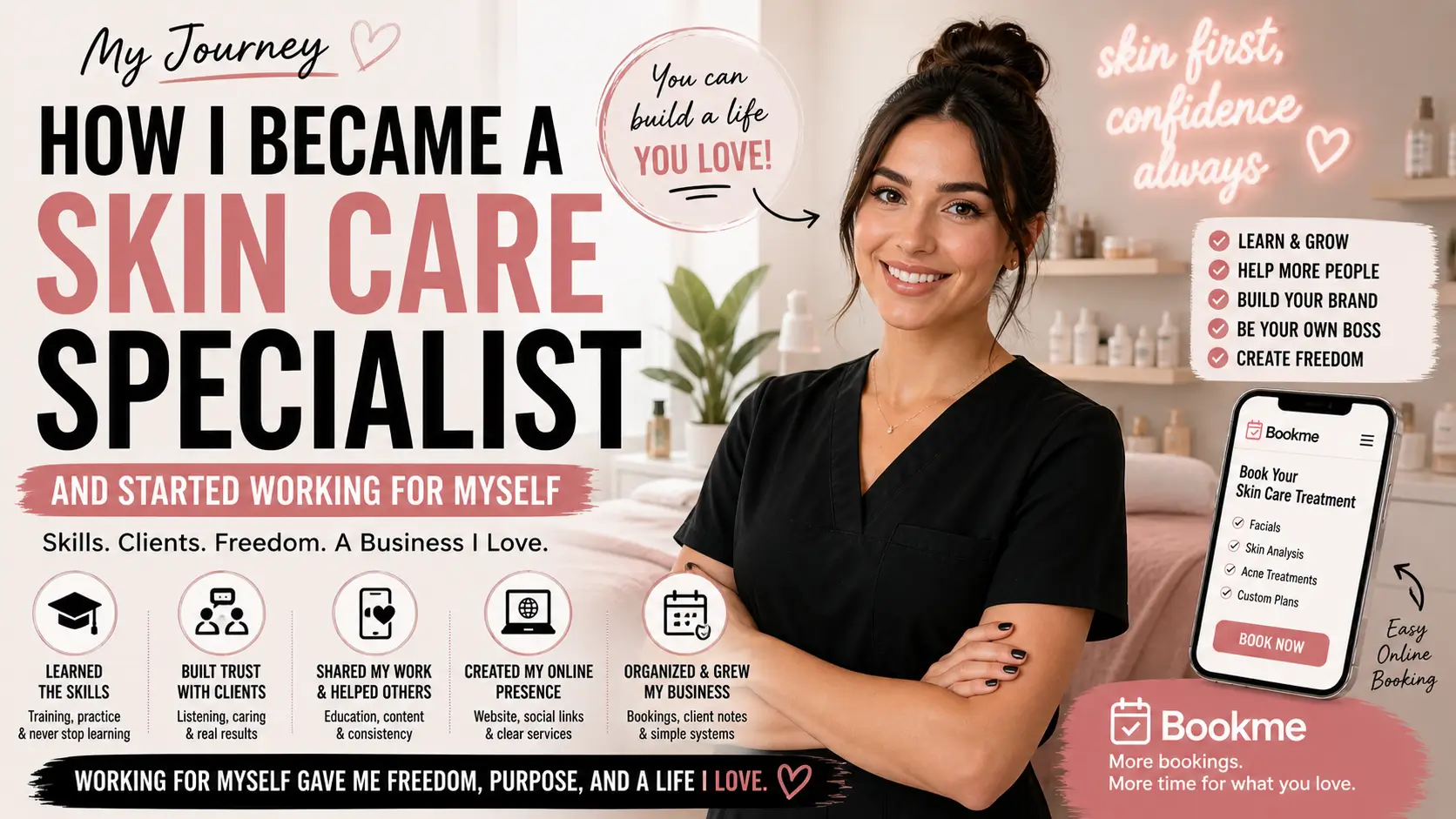
When I first became interested in skin care, I did not think much about business, marketing, booking systems, or client management. I simply loved the idea of helping people feel better about their skin.
I was fascinated by facials, skin routines, ingredients, and the way small improvements could make someone feel more confident. But very quickly, I realized something important: becoming a good skin care specialist is not only about knowing products and treatments. It is also about trust, consistency, communication, and learning how to build a real client experience.
Over time, skin care became more than a skill I wanted to learn. It became a path toward working for myself, building something of my own, and creating a business around something I genuinely cared about.
This is a story-style guide about how someone can become a skin care specialist, start building clients, create a professional presence, and enjoy the freedom of working independently.
Starting With the Basics
At the beginning, I wanted to learn everything at once. I watched videos, read about skin types, studied facial techniques, looked into product ingredients, and followed experienced estheticians and skin care professionals online.
But the more I learned, the more I understood that skin care is not something you can rush.
Before offering services to clients, I had to understand the basics: skin types, common skin concerns, sanitation, consultation, product safety, treatment steps, and realistic expectations.
Every client's skin is different. Some people struggle with dryness. Others deal with acne, sensitivity, redness, texture, clogged pores, or signs of aging. A treatment that works well for one person may not be right for another.
That lesson changed how I looked at skin care. I stopped thinking only about services and started thinking about the person in front of me.
A good skin care specialist does not just perform a treatment. A good specialist understands the client, listens carefully, and helps them feel safe and confident.
Learning to Listen to Clients
One of the biggest lessons I learned was that a good skin care specialist needs to listen carefully.
Many clients come in with frustration. They may have tried many products already. They may feel insecure about their skin. They may want fast results, even when their skin needs patience.
Instead of promising too much, I learned to ask better questions.
I wanted to understand their current routine, skin concerns, allergies, past treatments, lifestyle, and goals. I also learned to explain what was realistic and what would take time.
That helped me build trust.
Clients do not only want a facial or skin care treatment. They want to feel understood. They want to know that the person touching their skin is careful, professional, and honest.
Trust became one of the most important parts of the work.
Practicing My Technique
Knowledge matters, but practice is what builds confidence.
At first, I practiced every part of the service carefully: preparing the room, welcoming the client, analyzing the skin, explaining the treatment, applying products, maintaining hygiene, and making sure the client felt comfortable.
I paid attention to small details. Was the room clean? Was the towel warm enough? Did the client understand the treatment? Did I explain aftercare clearly? Did I write down what products were used?
The treatment itself mattered, but the full experience mattered too.
Over time, I became more confident. My hands felt steadier. My process became smoother. My consultations became more natural. I started to understand what clients needed before they even asked.
That confidence did not happen overnight. It came from repetition, mistakes, learning, and staying consistent.
Understanding That Skin Care Is Personal
Skin care is personal because people often come to you with concerns they feel emotional about.
A client may be worried about acne before an important event. Another client may feel frustrated with texture or dryness. Someone else may want to feel fresh, relaxed, and taken care of.
That is why the way you communicate matters so much.
Being a good skin care specialist is not about making unrealistic promises. It is about helping clients understand their skin, giving honest guidance, and creating a calm experience they want to return to.
Clients remember how they felt during the appointment. They remember whether you listened. They remember whether you explained things clearly. They remember whether the experience felt professional and comfortable.
That is what helps turn first-time clients into repeat clients.
Why I Wanted to Work for Myself
One of the reasons I chose skin care was the freedom it could give me.
I liked the idea of building something of my own, creating my own schedule, choosing the type of clients I wanted to serve, and growing at my own pace.
Working for yourself is not always easy. You have to be responsible for your time, your clients, your services, your marketing, and your results. There is no one else to blame when something is disorganized, and there is no manager reminding you what to do next.
But working for yourself also gives you something very valuable: ownership.
Every client you help, every review you receive, every repeat appointment, and every improvement in your business belongs to you.
That feeling can be incredibly motivating.
You are not just doing appointments. You are building your own name, your own reputation, and your own future.
Building My First Client Base
Getting the first clients was not easy.
At the beginning, I relied on people who already knew me: friends, family, referrals, and people from my local area. I took photos of my setup, shared skin care tips, posted about services, and slowly started building trust online.
I learned that people need to see you more than once before they book. One post is usually not enough. They may watch quietly for weeks before they finally decide to schedule.
So I stayed consistent.
I posted educational content, simple skin care advice, before-and-after progress when appropriate, and small behind-the-scenes moments. I wanted people to see that I cared about the work and took it seriously.
The more consistent I became, the more people started asking questions. Some wanted to know what treatment was right for them. Others asked about prices, availability, or how to book.
That was when I realized that getting attention was only one part of the process. I also needed a clear way to turn that attention into real appointments.
Creating a Professional Online Presence
One of the turning points was realizing that social media alone was not enough.
Instagram, TikTok, and Facebook helped people discover me, but I still needed a simple place where clients could understand my services, see what I offer, and know how to book.
A professional online presence made a big difference.
I needed a place for my services, business details, social media links, booking link, contact information, basic policies, and client instructions.
This made the business feel more real. It also made the experience easier for clients.
Instead of answering the same questions over and over again, I could guide clients to one clear place where they could learn about my services and take the next step.
For a skin care specialist, a simple website can help clients understand what you offer before they book. It can show your services, your style, your location, your social media, and how to schedule an appointment.
That clarity builds trust.
Turning My Skills Into a Real Business
At some point, I realized that being good at skin care was not enough. If I wanted to work for myself, I needed a simple system.
I needed clients to find me, understand my services, see my social media, and book without sending endless messages back and forth.
That is where Bookme helped.
With Bookme, I could create a simple business website, add my services, connect my social media links, and give clients one clear place to book appointments.
It made my work feel more professional and helped me spend less time managing messages and more time focusing on clients.
For someone starting a skin care business, this kind of setup can make a big difference. You do not need a complicated website or a big marketing team. You need a clean, simple way to show what you do and help clients book.
Download Bookme using the links below, then watch the setup tutorial.
Download Bookme on the App Store
The goal is simple: make your skin care business easier to find, easier to trust, and easier to book.
The Best Part About Working for Yourself
The best part about working for yourself is that your effort builds your own future.
When I improved my skills, my business improved. When I learned how to communicate better, clients trusted me more. When I made booking easier, more people scheduled appointments. When I stayed consistent, I started seeing growth.
It was not just about doing facials or skin care treatments. It was about building a business around something I cared about.
Working for yourself gives you more freedom, but it also teaches you discipline.
You learn to show up even when nobody is managing you. You learn to solve problems. You learn to care about the details because your name is attached to the result.
That is what made the journey feel meaningful.
The freedom is not only about choosing your hours. It is about knowing that your energy is going into something that belongs to you.
Keeping Clients Organized
As more clients started booking, organization became more important.
At first, it may feel easy to remember client details. But over time, it becomes difficult to keep everything in your head.
A skin care specialist may need to remember a client's skin concerns, allergies, previous treatments, preferred products, sensitivity, goals, and aftercare instructions.
Keeping client notes and treatment history helps create a better experience.
When a client returns and you remember what was used last time, what their concerns were, and what progress they made, they feel cared for. That kind of attention helps build loyalty.
Good organization also helps you avoid mistakes and provide more consistent service.
Making Rebooking Simple
Many skin care services work best when clients return regularly.
One facial may help, but long-term skin goals often require consistency. Clients may need follow-up appointments, maintenance treatments, or a recommended schedule based on their skin concerns.
That is why rebooking matters.
Before a client leaves, it helps to explain when they should come back and why. This should feel helpful, not pushy.
For example, you might say:
To keep working on your skin goals, I'd recommend coming back in about four to six weeks.
When clients understand the reason, they are more likely to rebook.
Making the booking process simple helps too. If clients have to search through messages or wait for a reply, they may delay. If they have a clear booking link, it is much easier to schedule the next visit.
Learning Marketing Without Feeling Fake
Marketing can feel uncomfortable at first, especially for people who simply want to do good work.
But marketing does not have to mean pretending or being pushy. For a skin care specialist, marketing can simply mean showing your work, educating your audience, and helping people understand how you can help.
Good content can include skin care tips, common mistakes, product education, treatment explanations, behind-the-scenes moments, client results when appropriate, and answers to common questions.
People often need trust before they book. Helpful content gives them a reason to trust you.
The goal is not to act like someone else. The goal is to show your knowledge, your care, and your professionalism.
What I Would Tell Someone Starting Today
If someone asked me how to become a skin care specialist and start working for themselves, I would tell them to be patient but serious.
Learn the basics. Respect sanitation. Practice your technique. Listen to clients. Be honest about results. Keep improving. Build your portfolio. Share your knowledge. Make it easy for people to book.
Do not wait until everything is perfect to start building your presence.
Your first website does not need to be perfect. Your first posts do not need to be perfect. Your first client process will improve over time.
The important thing is to start building the foundation.
Skills bring confidence. Consistency brings trust. Organization helps you grow.
Final Thoughts
Becoming a skin care specialist is not only about learning treatments. It is about learning how to care for people, build trust, communicate clearly, and create a professional experience.
Working for yourself makes the journey even more meaningful. It gives you the chance to build your own schedule, your own client base, your own style, and your own future.
But freedom works best with structure.
If you want to grow, you need both skill and organization. You need to keep learning, show your work, make your services clear, and give clients an easy way to book.
With the right habits and the right tools, skin care can become more than a service. It can become a business you are proud to build.
How do I become a skin care specialist?
To become a skin care specialist, you usually need to learn skin care fundamentals, understand local training or licensing requirements, practice treatment techniques, build client communication skills, and start developing a professional presence.
Do skin care specialists need a license?
In many places, skin care specialists or estheticians need a license to provide services professionally. Requirements vary by location, so you should check the rules in your area before offering paid treatments.
How can a skin care specialist get clients?
A skin care specialist can get clients through referrals, social media, local marketing, reviews, before-and-after content when appropriate, a simple website, and an easy booking process.
Is working for yourself as a skin care specialist worth it?
Working for yourself can be worth it if you enjoy independence, client relationships, and building your own business. It requires discipline, organization, and consistency, but it can also give you more control over your schedule and growth.
Should a skin care specialist have a website?
Yes. A website helps a skin care specialist look more professional, show services, share business details, connect social media links, and give clients a clear way to book appointments.
What should a skin care business website include?
A skin care business website should include services, location, business hours, contact information, social media links, booking options, client instructions, policies, and helpful information about what clients can expect.
How can skin care specialists keep clients coming back?
Skin care specialists can keep clients coming back by providing a great experience, giving honest guidance, tracking client notes, recommending follow-up appointments, and making rebooking simple.